Sunday, 25 June 2023

All Assignments (M.A.)

 Semester :- 1

  1. 'Life Of Pi' by Yann Martel…Click Here

  2. Worksheet, 'Aristotle's Poetics'...Click Here

  3. Biography of 'Edmund Spencer…Click Here

  4. Pride and Prejudice…Click Here

  5. Thinking Skill - Workshop…Click Here

  6. Visiting Victoria Park…Click Here

  7. Macbeth…Click Here

  8. Bridge Course - Wardsworth's Preface…Click Here

  9. Rape of the Lock…Click Here

  10. Post -Truth(Sunday Reading)...Click Here

  11. Frankenstein…Click Here

  12. A Tale of Tub…Click Here

  13. Teacher's Day Celebration…Click Here

  14. Dryden(Sunday Reading)...Click Here

  15. Lockdown Poem by Simon Armitage…Click Here

  16. History of Puritan and Restoration Age…Click Here

  17. A Tale of Tub( Creative & Critical Activity)...Click Here

  18. Absalom and Achitophel…Click Here

  19. The Victorian Poets…Click Here

  20. Hard Times…Click Here

  21. Title of the Novel 'Jude the Obscure'...Click Here

  22. Youth Festival…Click Here

  23. Importance of Being Earnest ' by Oscar Wilde…Click Here

  24. Assignment Paper :- 101Click Here

  25. Assignment Paper :- 102Click Here

  26. Assignment Paper :- 103Click Here

  27. Assignment Paper :- 104Click Here

  28. Assignment Paper :- 105Click Here

Semester :- 2


  1. W.B.Yeats Poems…Click Here

  2. Frame Study…Click Here

  3. The Great Dictators…Click Here

  4. 'For Whom the Bell Tolls' by Earnest Hemingway…Click Here

  5. The West Land by T.S.Eliot…Click Here

  6. Trends and Movements…Click Here

  7. 'The Birches' by Robert Frost…Click Here

  8. 'Tradition and Individual Talent ' by T.S.Eliot…Click Here

  9. Characteristics of the Comedy of Menace…Click Here

  10. The Great Gatsby…Click Here

  11. Existentialism : Flipped Learning…Click Here

  12. Indian Poetics…Click Here

  13. Transcendentalism…Click Here

  14. Waiting for Godot by Samuel Beckett…Click Here

  15. Practical Criticism - Figurative Language…Click Here

  16. War Poetry…Click Here

  17. Northrop Frye…Click Here

  18. Breath by Samuel Beckett…Click Here

  19. Orlando by Virginia Woolf…Click Here

  20. Assignment Paper:- 106…Click Here

  21. Assignment Paper:- 107…Click Here

  22. Assignment Paper:- 108…Click Here

  23. Assignment Paper:- 109…Click Here

  24. Assignment Paper:- 110…Click Here


Semester :-3

Modern Love Mumbai

R.K.Narayan's Short Stories

Digital Humanities

Deconstruction

Photography Workshop

Final Solutions

Teacher's Day (2023)

The Home and The World

Midnight's Children

Laxman by Toru Dutt

The Curse of The Karna

A Talk by Chimamanda Nagozi Adichie

Cultural Studies (Unit-1)

Frantz Fanon's: 'The Wretched of the Earth'

New Historicism

Foe by J.M.Coetzee

Postcolonial Studies

Cultural Studies

Criticism

Youth Festival 2023

All Assignments (B.A.)

 Novel :-

  1. The Bluest Eye , Tony Morrison…Click Here

  2. Far From the Madding Crowd…Click Here

  3. The Namesake…Click Here

  4. Animal Farm…Click Here

  5. Heart of Darkness…Click Here

  6. Dr. Jekyll and Mr. Hyde…Click Here

  7. Moby-Dick…Click Here


Play :-

  1. Othello…Click Here

  2. The Hairy Ape, Eugene O'Neill…Click Here

  3. Arthur Miller : All My Son's…Click Here

  4. Tughlaq…Click Here

  5. The Proposal…Click Here

  6. The Boy Comes Home…Click Here

  7. Ghashiram Kotwal…Click Here


Poetry :-

  1. The Daffodils…Click Here

  2. The Soldier…Click Here

  3. Ozymandias…Click Here

  4. Fear no More…Click Here

  5. Prayer before Birth…Click Here


Short Stories :-

  1. A Cup of Tea …Click Here

  2. The Postmaster…Click Here

  3. A True Story,Mark Twain…Click Here

  4. Blow up with Ship - Wilkie Collins…Click Here

  5. The Nightingale and Rose - Oscar Wilde…Click Here

  6. Quality - John Galsworthy…Click Here

  7. The Black Cat' - Edgar Allan Poe…Click Here

  8. The Trunk of Ganesha …Click Here


For the blogs of Master's of Arts......Click Here

Tuesday, 6 June 2023

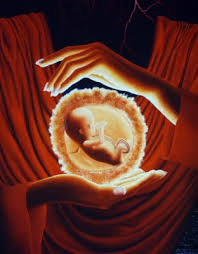
Prayer Before Birth: Louise MacNeice

 About Louis Macneice :-


Louis Macneice was born in Belfast, Ireland, and lived from 1907 until 1963. Therefore, he would have experienced World War I in his very early years and World War II in his later years. This particular poem was written during the Second World War. It is easy to see the author’s point of view in this poem. He writes from his own perspective as a newborn baby.


Of course, it quickly becomes clear that the baby has knowledge of one who has already lived. Therefore, ‘Prayer Before Birth’ reads like a prayer that an old man wished he could have prayed as a newborn before the world got a hold of him with all of the evil therein. The reader, being fully aware that no such prayer can come from an infant, realize that the author himself is speaking his own thoughts through the infant child. Therefore, the author’s beliefs about evil, war, and the world are revealed.


Summary of the Poem :-


'Prayer Before Birth' is a poem that is relevant still today and grows more powerful as the world becomes a more dangerous place. It is a dramatic monologue but has the pattern of an incantation and the spirit of a prayer.


The speaker is the unborn child inside the mother's womb, thinking of the future as it is about to be born. This unusual perspective gives the poem a highly charged aura which intensifies as the stanzas progress.

Here is a baby who is already fearful, who intuitively knows that the world it is about to enter surely isn't anywhere close to Paradise.


The child pleas for protection and prays that it won't be corrupted once it emerges onto planet earth. This is unsettling reading for any adult, even with only an iota of sensitivity, the potential horrors this little human being faces beggars belief. Yet, the poem is firmly rooted in grim reality.


Louis MacNeice's poem captures the fears and anxieties perfectly because the voice is that of the baby not yet out into the war-torn air. And with each stanza comes the build-up of understanding for the reader - these are also the fears of the adults, the parents and the generations that allowed such an environment to exist in the first place.


Themes :-


Throughout ‘Prayer Before Birth,’ the poet engages with themes of religion and life struggles. This unusual poem, which comes from a very special speaker, engages with these themes in a direct way. Readers are not going to have trouble understanding the speaker’s view on religion and God, as well as life’s struggles. They spend the lines discussing the hard life they have to deal with once they’re born and their hope that God is going to grant them joy throughout it. It’s only through God, they allude, that they can live a good life.


Structure and Form :-


‘Prayer Before Birth’ by Louis MacNeice is an eight-stanza poem that is divided into uneven sets of lines. The first and sixth stanzas have three lines, the second and third have four, the fourth has six, the fifth has seven, and the seventh has ten. The poet chose to write this poem in free verse. This means that the lines do not conform to a specific rhyme scheme or metrical pattern. But, that doesn’t mean the poem is entirely without rhyme. Even those written in free verse still make use of some examples of structure. For example, the exact rhyme with “me” is repeated twice in stanza six and eight.


Literary Devices :-


MacNeice makes use of several literary devices in ‘Prayer Before Birth.’ These include but are not limited to:


Caesura  occurs when the writer inserts a pause into the middle of a line. It can be done through meter or punctuation. For example, “would make me a cog in a machine, a thing with” in stanza seven.


Epistrophe occurs when lines end with the same word/words. For example, “me” at the ends of all four lines of stanza two. The word “me” ends lines in every stanza, in fact.


Enjambment occurs when the poet cuts off a line before its natural stopping point. For example, the transition between lines one and two of stanza seven and lines one and two of stanza three.


Mood of Poem :-


The mood is contemplative and concerned. Most readers may find some peace in the speaker’s words because there's also a concern as they’re inspired to consider their own life and what a child might experience they brought into it. The innocence of childhood is powerfully contrasted against the darkness of reality.


                           *******************

Thursday, 4 May 2023

Fear No More -Shakespeare


  • Introduction :-


The lines of ‘Fear no more the heat o’ the sun’ are sung in the play Cymbeline, over the recreantly deceased forms of Cloten and Fidele. It appears in Act IV, Scene 2, and is sung by Guiderius and Argiragus, the sons of Cymbeline. They alternate verses, or stanzas. Cymbeline is also known as The Tragedie of Cymebline or Cymbeline, King of Britain. By some, the play is considered to be a romance or a comedy and it was included in the First Folio in 1623 but scholars are unsure when exactly it was written. Some believe that a secondary writer might’ve worked on the play, specifically parts of Act II and Act V. Today, Cymbeline is one of Shakespeare’s lesser-known plays but at the time it was quite popular. John Keats even later named it as one of his favourites.

  • About the Poet :-


William Shakespeare, Shakespeare also spelled Shakspere, byname Bard of Avon or Swan of Avon, (baptized April 26, 1564, Stratford-upon-Avon, Warwickshire, England—died April 23, 1616, Stratford-upon-Avon), English poet, dramatist, and actor often called the English national poet and considered by many to be the greatest dramatist of all time.Shakespeare occupies a position unique in world literature. 


His Notable works includes, “A Midsummer Night’s Dream” “All’s Well That Ends Well” “Antony and Cleopatra” “As You Like It” “Coriolanus” “Cymbeline” First Folio “Hamlet” “Henry IV, Part 1” “Henry IV, Part 2” “Henry V” “Henry VI, Part 1” “Henry VI, Part 2” “Henry VI, Part 3” “Henry VIII” “Julius Caesar” “King John” “King Lear” “Love’s Labour’s Lost” “Macbeth” “Measure for Measure” “Much Ado About Nothing” “Othello” “Pericles” “Richard III” “The Comedy of Errors” “The Merchant of Venice” “The Merry Wives of Windsor” “The Taming of the Shrew” “The Tempest” “Timon of Athens”.


  • A Poem :-


Song: “Fear no more the heat o’ the sun” 


Fear no more the heat o’ the sun,

Nor the furious winter’s rages;

Thou thy worldly task hast done,

Home art gone, and ta’en thy wages:

Golden lads and girls all must,

As chimney-sweepers, come to dust.


Fear no more the frown o’ the great;

Thou art past the tyrant’s stroke;

Care no more to clothe and eat;

To thee the reed is as the oak:

The scepter, learning, physic, must

All follow this, and come to dust.


Fear no more the lightning flash,

Nor the all-dreaded thunder stone;

Fear not slander, censure rash;

Thou hast finished joy and moan:

All lovers young, all lovers must

Consign to thee, and come to dust.


No exorciser harm thee!

Nor no witchcraft charm thee!

Ghost unlaid forbear thee!

Nothing ill come near thee!

Quiet consummation have;

And renownèd be thy grave!


  • BY WILLIAM SHAKESPEARE


  • Analysis of the Poem :-


Summary of Poem :-


In the lines of the poem/song, the two speakers go through all the reasons that the listeners, who can’t actually hear them, should be glad their dead. They are rid of all work, jobs, and responsibilities that the real world would demand of them. They also don’t have to worry about punishments from those in power or following any set of rules. There is also a repetition of the fact that everyone, no matter their beauty, power, or age will find death. 


Themes of the Poem :-


The primary theme in ‘Fear no more the heat o’ the sun’ is quite clear, it is death. The lines of this poem/song are quite simple, especially for Shakespeare, and convey quite clearly the speakers’ interest, death, and the escape it provides from life. They take turns laying out all the reasons that someone who has died should be glad they did. This isn’t in order to drive someone to suicide, but so that the two “deaths” that feature in this section of the play are cast in a less depressing light. 


Structure and Form :-


Song: “Fear no more the heat o’ the sun” by William Shakespeare is a four stanza excerpt from the play Cymbeline. These four verses of the song, or stanzas in this context, follow a rhyme scheme ABCBDD, changing end sounds from stanza to stanza. There is a good example of repetition at the end of the first three stanzas where Shakespeare uses epistrophe, repeating the words “must” and “dust”  at the ends of lines five and six of stanzas one, two, and three. The same technique appears in the final stanza where the rhyme scheme is broken and “thee” ends the first four lines of the stanza. 


Literary Devices

Shakespeare makes use of several literary devices in ‘Fear no more the heat o’ the sun’. These include but are not limited to juxtaposition, enjambment, and an example of an apostrophe. The first, juxtaposition, is seen through the various things that the speaker believes dead people no longer have to concern themselves with. A good example can be found in the first stanza when the singers suggest that neither “winter’s rages” nor the “heat o’ the sun” should bother the dead. 


Enjambment is another common formal device that appears throughout Shakespeare’s plays and poems. In this case, readers can find a few examples. For instance, the transition between lines five and six of the second stanza and five and six of the third stanza. 


In these lines, Shakespeare also uses another technique known as an apostrophe. This is seen when the speaker or speakers address their words to someone or something that cannot hear them or is unable to hear them. In this case, they are talking to people who are either sleeping or dead. 


  • Conclusion :-


The poem is a plea to God to keep the country safe from wickedness. Tagore wrote the poem while India was still under British rule and people were excitedly anticipating their independence. It is a prayer to the Almighty for a nation free of all manipulation and corruption.

Wednesday, 3 May 2023

Ozymandias -Shelley

 Introduction :-


"Ozymandias" is a sonnet written by the English romantic poet Percy Bysshe Shelley (1792–1822). It was first published in the 11 January 1818 issue of The Examiner of London. The poem was included the following year in Shelley's collection Rosalind and Helen, A Modern Eclogue; with Other Poems, and in a posthumous compilation of his poems published in 1826.


Shelley wrote the poem in friendly competition with his friend and fellow poet Horace Smith (1779–1849), who also wrote a sonnet on the same topic with the same title. The poem explores the worldly fate of history and the ravages of time: even the greatest men and the empires they forge are impermanent, their legacies fated to decay into oblivion.


About the Poet :-


Percy Bysshe Shelley ( 4 August 1792 – 8 July 1822) was one of the major English Romantic poets.[3][4] A radical in his poetry as well as in his political and social views, Shelley did not achieve fame during his lifetime, but recognition of his achievements in poetry grew steadily following his death and he became an important influence on subsequent generations of poets including Robert Browning, Algernon Charles Swinburne, Thomas Hardy, and W. B. Yeats.[5] American literary critic Harold Bloom describes him as "a superb craftsman, a lyric poet without rival, and surely one of the most advanced sceptical intellectuals ever to write a poem."


Tragically, Shelley died young, at the age of 29, when the boat he was sailing got caught in a storm. His body washed to shore sometime later.


A Poem :-


I met a traveller from an antique land,

Who said—“Two vast and trunkless legs of stone

Stand in the desert. . . . Near them, on the sand,

Half sunk a shattered visage lies, whose frown,

And wrinkled lip, and sneer of cold command,

Tell that its sculptor well those passions read

Which yet survive, stamped on these lifeless things,

The hand that mocked them, and the heart that fed;

And on the pedestal, these words appear:

My name is Ozymandias, King of Kings;

Look on my Works, ye Mighty, and despair!

Nothing beside remains. Round the decay

Of that colossal Wreck, boundless and bare

The lone and level sands stretch far away.”


BY PERCY BYSSHE SHELLEY


Analysis of the Poem :-


  • Summary of the Poem :-


In this poem, the speaker describes meeting a traveler “from an antique land.” The title, ‘Ozymandias,’ notifies the reader that this land is most probably Egypt since Ozymandias was what the Greeks called Ramses II. He was a great and terrible pharaoh in ancient Egypt.


The traveler tells a story to the speaker. In the story, he describes visiting Egypt. There, he saw a large and intimidating statue of Ramses in the desert. He can tell that the sculptor must have known his subject well because it is obvious from the statue’s face that this man was a great leader, but one who could also be very vicious.


He describes his sneer as having a “cold command.” Even though the leader was probably very great, it seems that the only thing that survives from his realm is this statue, which is half-buried and somewhat falling apart.


  • Structure and Form


Form :- Sonnet

Rhyme Scheme :- ABABACDC EDEFEF

Meter :- Iambic Pentameter


‘Ozymandias’ is considered to be a Petrarchan sonnet, even though the rhyme scheme varies slightly from the traditional sonnet form. Structurally all sonnets contain fourteen lines and are written in iambic pentameter.


The rhyme scheme of ‘Ozymandias’ is ABABACDC EDEFEF. This rhyme scheme differs from the rhyme scheme of a traditional Petrarchan sonnet, whose octave (the first eight lines of the poem) usually has a rhyme scheme of ABBAABBA. Its sestet (the final six lines of the sonnet) does not have an assigned rhyme scheme, but it usually rhymes in every other line or contains three different rhymes.


Shelley’s defiance of this rhyme scheme helps to set apart ‘Ozymandias’ from other Petrarchan sonnets, and it is perhaps why this poem is so memorable. The reason he did this may have been to represent the corruption of authority or lawmakers.


  • Literary Devices :-


Shelley plays with a number of figurative devices in order to make the sonnet more appealing to readers. These devices include:


  1. Enjambment :- Shelley uses this device throughout the text. For example, it occurs in lines 2-8. By enjambing the lines, the poet creates a surprising flow.


  1. Alliteration :- It occurs in “an antique,” “stone/ Stand,” “sunk a shattered,” “cold command,” etc.


  1. Metaphor :- The “sneer of cold command” contains a metaphor. Here, the ruler’s contempt for his subjugates is compared to the ruthlessness of a military commander.


  1. Irony :- Shelley uses this device in the following lines, “Look on my Works, ye Mighty, and despair!/ Nothing beside remains.” The following lines also contain this device.


  1. Synecdoche :- In the poem, the “hand” and “heart” collectively hint at the pharaoh, Ozymandias, as a whole. It is a use of synecdoche.


  1. Allusion :- The line “My name is Ozymandias, King of Kings” is an allusion to the actual inscription described in the Greek historian Diodorus Siculus’s Bibliotheca historica.


Themes of the Poem :-


Shelley makes use of a number of themes in this sonnet. The most important theme is the impermanence of a ruler’s glory and his legacy. It is an implicit hint at the idea of futility. No matter how hard a man tries to rivet his name, at some point, people will forget him. For example, Ozymandias tried to become greater than God. He declared himself the “King of Kings.” If we look at history, every ambitious ruler declared them, more or less, by the same title. In their pursuit of greatness, they forgot about their very nature: every living thing must die. Besides, the sonnet also utilizes the themes of vainglory, the power of art, the decline of power, etc.


Conclusion :-


The passage of time destroys even the most powerful or mightiest person or thing in the world. Thus, we should not be boastful, egoistic or live with pride. Instead, we should live a life of simplicity.