Wednesday, 22 November 2023

Assignment Paper :-203


Assignment Paper :- 22408: Paper 203: The Postcolonial Studies


Name :- Aarti Bhupatbhai Sarvaiya 

Batch :- M.A. Sem. 3 (2022-2024)

Enrollment N/o. :-  4069206420220027

Roll N/o. :-  01

Subject Code & Paper N/o. :- 22408: Paper 203: The Postcolonial Studies

Email Address :-  aartisarvaiya7010@gmail.com

Submitted to :- Smt. S. B. Gardi Department of English        – Maharaja Krishnakumarsinhji Bhavnagar University – Bhavnagar – 364001

Date of Submission :- 1 December , 2023


    Violence in 'The Wretched of the Earth' 


Introduction :-


"The Wretched of the Earth" is a seminal work by Frantz Fanon, a psychiatrist and revolutionary writer. Published in 1961, the book explores the psychological and social effects of colonisation on the colonised people, delving into the dehumanising impact of imperialism. Fanon analyses the dynamics of colonialism and the psychological implications for both the colonisers and the colonised. His insights on violence, decolonization, and the quest for national liberation have had a profound influence on post-colonial studies and liberation movements.


About the Writer :-
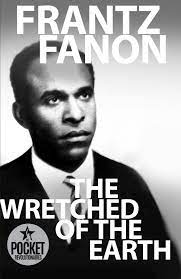

Frantz Omar Fanon  was a Francophone Afro-Caribbean psychiatrist, political philosopher, and Marxist from the French colony of Martinique (today a French department). His works have become influential in the fields of post-colonial studies, critical theory, and Marxism. As well as being an intellectual, Fanon was a political radical, Pan-Africanist, and Marxist humanist concerned with the psychopathology of colonisation and the human, social, and cultural consequences of decolonization.


In the course of his work as a physician and psychiatrist, Fanon supported the Algerian War of independence from France and was a member of the Algerian National Liberation Front. Fanon has been described as "the most influential anticolonial thinker of his time". For more than five decades, the life and works of Fanon have inspired national liberation movements and other freedom and political movements in Palestine, Sri Lanka, South Africa, and the United States. He formulated a model for community psychology, believing that many mental health patients would do better if they were integrated into their family and community instead of being treated with institutionalised care. He also helped found the field of institutional psychotherapy while working at Saint-Alban under Francois Tosquelles and Jean Oury.


About the Novel :-


The Wretched of the Earth is a 1961 book by the philosopher Frantz Fanon, in which the author provides a psychoanalysis of the dehumanising effects of colonisation upon the individual and the nation, and discusses the broader social, cultural, and political implications of establishing a social movement for the decolonization of a person and of a people. The French-language title derives from the opening lyrics of "The Internationale" anthem.

Through critiques of nationalism and of imperialism, Fanon presents a discussion of personal and societal mental health, a discussion of how the use of language (vocabulary) is applied to the establishment of imperialist identities, such as coloniser and colonised, to teach and psychologically mould the native and the colonist into their respective roles as slave and master, and a discussion of the role of the intellectual in a revolution. Fanon proposes that revolutionaries should seek the help of the lumpenproletariat to provide the force required to effect the expulsion of the colonists. In traditional Marxist theory, the lumpenproletariat are the lowest, most degraded stratum of the proletariat—especially criminals, vagrants and the unemployed—people who lack the class consciousness to participate in the socialist revolution.


Fanon applies the term lumpenproletariat to the colonial subjects who are not involved in industrial production, especially the peasantry, because, unlike the urban proletariat (the working class), the lumpenproletariat has sufficient intellectual independence from the dominant ideology of the colonial ruling class, ready to grasp that they can revolt against the colonial status quo and so decolonize their nation. One of the essays included in "The Wretched of the Earth" is "On National Culture", in which Fanon highlights the necessity for each generation to discover its mission and fight for it.


'Racism and Violence' in 'The Wretched of the Earth ' :-


In The Wretched of the Earth, Fanon critiques the alienating imperialist power of colonisation and lays out the dialectical progression for the colonised to achieve liberation. The book is also Fanon's most controversial work, because in the first chapter he argues that total decolonization cannot be attained without violence . Fanon saw violence as the only language colonisers truly understand. Through violence, imperialists instilled a sense of inferiority in the colonised, and it was therefore through violence that the colonised could regain a sense of self, a sense of culture, and the physical reality of statehood. From the privilege of ethical idealism, it is easy to criticise Fanon for his support of violence, much like Malcolm X was criticised; however, violence often seems less necessary to those not subjugated by it.


In his later life, Fanon became deeply involved in the Pan-Africanist movement, eventually becoming an anti-French Algerian emissary to Ghana and other African countries. It was in Ghana that Fanon was diagnosed with leukemia. He initially sought treatment in the Soviet Union and eventually the United States. In 1961, under the pseudonym "Ibrahim Fanon," Fanon passed away in Bethesda, Maryland. Shortly before his death, he dictated the last chapter of The Wretched of the Earth. His body was buried in Martyrs' Graveyard in El Taref Province in northeastern Algeria.


Although it has been almost 60 years since his death, Fanon's writings remain relevant for their insight into the ontological traumas of racial discrimination and the psychiatric consequences of race-based violence.


In The Wretched of the Earth, Fanon discusses the well-known crimes of European colonialism, he mentions the massacres committed by the colonial authorities: 45,000 killed at Setif in Algeria in 1945; 90,000 in Madagascar in 1947; whole villages in Algeria wiped out in response to the killing of one or two Frenchmen. This "violence in the colonies," Sartre comments, "does not only have for its aim the keeping of these enslaved men [the natives] at arm's length; it seeks to dehumanise them" (1963, 13). In order to justify their violence in the colonies, Fanon suggests that the colonial authorities depict a distorted polarised image of the colonised peoples. He goes on to say that Native society is not essentially depicted as a society lacking in values. It is not sufficient for the colonists to assert that those values have vanished from, or never existed within, the colonial world. The native is pronounced morally absent; he does not only speak of the absence of values, but also of their invalidation. He is, let us confess, the adversary of values, and in this sense he is unbridled evil. (1963, 33-34). 


The values of the natives are thus degraded compared to the values of the settlers. The customs, traditions, myths, and even the religion of the colonised people are to be considered as the very sign of the poverty of spirit. Thus, "the colonial world is a Manichean world" (Fanon 1963, 33). In this world the good settler is considered to represent values, while the bad native represents the negation of values. The native is considered evil in the shape of a human being.


While colonialism establishes its powerful authority by facilitating or imposing the existence of a conflictual atmosphere among the tribes and regions, the native's violence unifies these tribes and regions to face one enemy. It thus constructs a national consciousness.Furthermore, violence during the period of resistance struggle has its own significance at the individual level. Violence is cleansing and restorative: it ends the native's inferiority complex and restores his self-respect. This is one of the reasons why, for Fanon, "decolonisation is the veritable creation of new men" 

(1963, 30). Through violence, the thing that has been colonised becomes a man who can face his enemies. Thus, "to shoot down a European," Sartre comments, 

"is to kill two birds with one stone" (1963, 18). Violence destroys the oppressor and at the same time the fear of the oppressed.


It is clear that Frantz Fanon has presented many justifications for the violence in the colonial context. He spotlighted the role of violence as an inevitable means of resistance in the colonial context. For him, violence is to represent a reaction to the violence of the coloniser practised in the colonised country. Moreover, it is the most effective strategy of resistance, forcing the colonial power to negotiate and giving the colonised the opportunity to speak. It is to be regarded as an outlet for the native’s anger from the unfair treatment imposed upon him by the colonial power. Then he goes further to claim that violence in the colonial context is to unify the diverse native elements of the society to resist the colonial existence, and it helps in ending the complex of the native's inadequacy as well as it reestablishes the colonised self-respect. Furthermore, it creates the conceivable results of opening transactions and negotiations that lead to freedom.


Conclusion :-


Frantz Fanon's legacy endures through his seminal work, "The Wretched of the Earth," where he controversially advocates for violence as a necessary tool in the decolonization process. He contends that violence, as a response to colonial oppression, not only serves as a means of resistance but also restores the dignity and self-respect of the colonised. Fanon's analysis of the dehumanising tactics employed by colonial powers sheds light on the ontological traumas of racial discrimination. Despite the ethical critiques of his stance on violence, Fanon's insights into the psychological consequences of colonisation and the imperative for resistance remain relevant, providing a profound understanding of the complexities inherent in the struggle for liberation.


Word Count :- 1580

Images :- 02

Assignment Paper -202


Assignment Paper :-  Indian English Literature – Post-Independence


Name :- Aarti Bhupatbhai Sarvaiya 

Batch :- M.A. Sem. 3 (2022-2024)

Enrollment N/o. :-  4069206420220027

Roll N/o. :-  01

Subject Code & Paper N/o. :- 22407

Paper :- Indian English Literature –Post-Independence

Email Address :-  aartisarvaiya7010@gmail.com

Submitted to :- Smt. S. B. Gardi Department of English        – Maharaja Krishnakumarsinhji Bhavnagar University – Bhavnagar – 364001

Date of Submission :- 1 December, 2023


Narrative Technique in Midnight's Children


Introduction :-


"Midnight's Children" is a novel by Salman Rushdie that explores the tumultuous history of India through the life of Saleem Sinai, a boy born at the exact moment of India's independence in 1947. The story weaves magical realism with historical events, offering a unique perspective on the country's social and political changes. Rushdie's narrative style and intricate storytelling contribute to the novel's acclaim and recognition, including the Booker Prize for Fiction in 1981.


About The Writer :-


Sir Ahmed Salman Rushdie is an Indian-born British-American novelist. His work often combines magic realism with historical fiction and primarily deals with connections, disruptions, and migrations between Eastern and Western civilizations, typically set on the Indian subcontinent. Rushdie's second novel, Midnight's Children (1981), won the Booker Prize in 1981 and was deemed to be "the best novel of all winners" on two occasions, marking the 25th and the 40th anniversary of the prize.


After his fourth novel, The Satanic Verses (1988), Rushdie became the subject of several assassination attempts and death threats, including a fatwa calling for his death issued by Ruhollah Khomeini, the supreme leader of Iran. Numerous killings and bombings have been carried out by extremists who cite the book as motivation, sparking a debate about censorship and religiously motivated violence. In 2022, a man stabbed Rushdie after rushing onto the stage where the novelist was scheduled to deliver a lecture at an event in Chautauqua, New York.


In 1983, Rushdie was elected a fellow of the Royal Society of Literature. He was appointed a Commandeur de l'Ordre des Arts et des Lettres of France in 1999. Rushdie was knighted in 2007 for his services to literature. In 2008, The Times ranked him 13th on its list of the 50 greatest British writers since 1945. Since 2000, Rushdie has lived in the United States. He was named Distinguished Writer in Residence at the Arthur L. Carter Journalism Institute of New York University in 2015. Earlier, he taught at Emory University. He was elected to the American Academy of Arts and Letters. In 2012, he published Joseph Anton: A Memoir, an account of his life in the wake of the events following The Satanic Verses. Rushdie was named one of the 100 most influential people in the world by Time magazine in April 2023.


About the Novel :-

Midnight's Children is a 1981 novel by Indian-British writer Salman Rushdie, published by Jonathan Cape with cover design by Bill Botten, about India's transition from British colonial rule to independence and partition. It is a postcolonial, postmodern and magical realist story told by its chief protagonist, Saleem Sinai, set in the context of historical events. The style of preserving history with fictional accounts is self-reflexive.


Midnight's Children sold over one million copies in the UK alone and won the Booker Prize and James Tait Black Memorial Prize in 1981. It was awarded the "Booker of Bookers" Prize and the best all-time prize winners in 1993 and 2008 to celebrate the Booker Prize 25th and 40th anniversary. In 2003 the novel appeared at number 100 on the BBC's The Big Read poll which determined the UK's "best-loved novels" of all time.


Narrative Technique in Midnight's Children's :-

Salman Rushdie is undoubtedly one of the most famous novelists in present time. His second novel Midnight's Children received greater critical acclaim and made Rushdie a famous literary figure in the English speaking world. The novel won him the Booker of Bookers prize in 1993. In the novel Rushdie introduces an innovator narrative technique which is different from the contemporary writers.He uses the first person narrative through Saleem Sinai, the protagonist of the novel. Rushdie also makes good use of the device of Magic Realism in Midnight'sChildren. Further Rushdie's use of cinematic elements can clearly be seen in the novel. All this shows Bombay Cinema's influence on Rushdie and Rushdie's Use of Indianized English is his biggest achievement. His use of Indian worldlike ekdum, angrez, firangee etc. give Indian flavour to the novel. Above all,Rushdie can be considered the master of narrative techniques at present time.


Throughout this novel the narrative style is always shifting. Saleem narrates in the first person, addressing the audience directly and informally. At the beginning of the story he is writing as if he is trying to get everything out as fast as possible, in a stream of consciousness form. This shows how important his story is to write before he dies. Throughout his narration, he is weaving in and out of different stories from generations, leaving holes in some of his stories. Saleem even admits his own mistakes in his narration style. This might reflect how Saleem himself is having a hard time grasping and understanding all that is going on in his life. It also allows the reader to connect certain things they would not have connected with a linear account. For example, when Mary Pereira reveals the truth about Saleem’s birth, the characters experience what it is like when the past comes to affect the present. This might be used to show that history not only repeats itself, but it also comes back. With the new shift in narration he explains the bombings like a movie trailer. On page 398 he states, “in short, there are still next-attractions and coming-soons galore; a chapter ends when one’s parents die but a new kind of chapter begins.” 


THE  TECHNIQUE  OF  FIRST  PERSON NARRATION


Rushdie  employees  the  technique  of  the  first  personnarrative  in Midnight's  Children.  The  characters  are introduced  long  before  they  actually  appear  in  the novel.  It  creates  suspense  in  the  mind  of  the  readers. The novel covers a period of seventy five years of the history  of  the  Indian  subcontinent.  The  protagonist, Saleem  Sinai,  narrates  the  story  of  his  birth  and  the birth  of  Indian  subcontinent.  The  narrative  blurs  the chronological  boundaries.  As,  Rushdies  counterpart, Saleem  Sinai  narrates  his  story  from  a  distance  of time,  and  place.  Like  the  narrator  of  Mahabharta, Sanjay  who  is  endowed  with  special  power  to  see things from a distance, and narrates the events of the Kurukshetra   war,   Saleen   is   endowed   with   magic power  so  that  he  can  see  from  a  distance  and  read the mind of readers.


THE  USE  ORIENTAL AND  WESTERN TEXTS


Rushdie has cleverly used both oriental and Western text in the novel. He remains indebted to a few writers and  their  works,  chief  of  which  are  Laurence  stern's Tristram ShandyGunter Grass The Tin DrumGabrial Garcia Marquez'sOne Hundred years of Solitudeand Rudyard  Kipling's Kim.  Saleem,  in  the  novel,  himself is   truly   cosmopolitan.   He   is   partly   Hindu,   partly Muslim  and  partly  Christian  intermixing  of  various religions  and  cultures  that  make  of  India. Midnight's Children Do  not  agree  with  the  Hindu  world  view  of Indian  society  as  homogenous  one.  Rushdie  also owes   his   narrative   device   to   Punch   Tantra   and Katha Sarit Sagar.


MAGIC REALISM :-


Rushdie   adopts   the   device   of   Magic   realism   in Midnight's  children.  Magic  Realism  is  a  term  originally coined  by  German  out  Critic  Frantz  Roh  in  1925  to describe the tendencies in the work of certain German painters  in  the  early  twenties.    But  the  term  was  first applied to literature by Cuban novelist Alejo Carpentier in the late 1940's. Basically magic realism was a Latin American phenomenon characterized by the incorporation  of  supernatural  elements  into  realistic fiction.  Some  well-known  writers  who  used  this  new device   were   Jorge   Amanda,   Jorge   Luis   Borges, Gabriel  Gorcia  Marques  etc.  Some  characteristics  of this  new  style  were  identified  as  the  mingling  of  the realistic and fantastic, natural and supernatural, skillful time  shifts,  use  of  dreams,  myths,  fantasy  and  fairy tales.  Salman  Rushdie  has  written  critically  acclaimed magical realist novels. His Midnight's Children,Shame, and The  Satanic  Verses Incorporate  the  technique  of magic  realism.  While  reading  the Midnight's  Children We find that the whole novel is a perfect combination of reality and imaginary between the real and the unreal.There  are many  places  in Midnight's  Children Where Rushdie  used  the  device  of  magic  realism  for  the framework  of  the  novel.  When  we  go  through  the novel,  we  find  that  Saleem  Sinai,  the  protagonist,  has the  gift  of  having  an  incredible  sense  of  smell  which allows    himto    determine    other's    thoughts    and emotions.  This  gift  of  Saleem  is  same  to  that  of  his grandfather  Adam  Ajiz  who  also  had  the  same  large nose  and  magical  gift.  In  the  novel  we  see  that  how Adam's incredible sense of smell and his magical nose saved  him  from  being  killed  in  the  Jallianwala  Bagh Massacre :"As the fifty-one men March down the alleyway a tickle replaces  the  itch  in  my  grandfather's  nose...  Adam Aziz Ceases to concentrate on the events around him as   the   tickle  mount   to   unbearable   intensities.   As Brigadier  Dyre  issues  a  command  the  sneeze  hits my grandfather    full  in  the  face  "Yaaaakh-thoooo!"  he sneezes and falls forward, losing his balance, following his nose and thereby saving his life" .Thus  Adams'  sneeze  provides  a  sense  of  humors  as well  as  a  kind  of  pity  and  fear  in  the  heart  of  readers. In  this  way,  the  author  plays  beautifully  with  magic realism in such realistic and serious incidents of history of India.


Conclusion :-


To   conclude,   one   can   say   that   Rushdie's   use   of innovative  narrative  technique  has  made Midnight's Children a complex  and  highly  challenging  work  of fiction.   Along   with   the   content   and   its   marvellous treatment, this new and innovative narrative technique enabled   Rushdie   to   capture   the   topmost   position among  the  winners  of  the  Booker  Prize  over  the  past twenty five years.


Word Count :- 1640 

Images :- 03


Assignment Paper -201


Assignment Paper :- Indian English Literature – Pre-Independence


Name :- Aarti Bhupatbhai Sarvaiya 

Batch :- M.A. Sem. 3 (2022-2024)

Enrollment N/o. :-  4069206420220027

Roll N/o. :-  01

Subject Code & Paper N/o. :- 22406

Paper :- Indian English Literature – Pre-Independence

Email Address :-  aartisarvaiya7010@gmail.com

Submitted to :- Smt. S. B. Gardi Department of English        – Maharaja Krishnakumarsinhji Bhavnagar University – Bhavnagar – 364001

Date of Submission :- 1 December, 2023


The home and the world as a political novel 


Introduction :-


"The Home and the World" is a novel by Rabindranath Tagore, exploring themes of nationalism, love, and the clash between tradition and modernity in early 20th-century India. It provides a thought-provoking perspective on societal changes during that period.


About the Novelist  :-


Rabindranath Tagore FRAS ( 7 May 1861 – 8 August 1941) was an Indian poet, writer, playwright, composer, philosopher, social reformer and painter. He reshaped Bengali literature and music as well as Indian art with Contextual Modernism in the late 19th and early 20th centuries. Author of the "profoundly sensitive, fresh and beautiful" poetry of Gitanjali,he became in 1913 the first non-European and the first lyricist to win the Nobel Prize in Literature. Tagore's poetic songs were viewed as spiritual and mercurial; where his elegant prose and magical poetry were widely popular in the Indian subcontinent. He was a fellow of the Royal Asiatic Society. Referred to as "the Bard of Bengal",Tagore was known by sobriquets: Gurudeb, Kobiguru, and Biswokobi.


A Bengali Brahmin from Calcutta with ancestral gentry roots in Burdwan district and Jessore, Tagore wrote poetry as an eight-year-old. At the age of sixteen, he released his first substantial poems under the pseudonym Bhānusiṃha ("Sun Lion"), which were seized upon by literary authorities as long-lost classics. By 1877 he graduated to his first short stories and dramas, published under his real name. As a humanist, universalist, internationalist, and ardent critic of nationalism, he denounced the British Raj and advocated independence from Britain. As an exponent of the Bengal Renaissance, he advanced a vast canon that comprised paintings, sketches and doodles, hundreds of texts, and some two thousand songs; his legacy also endures in his founding of Visva-Bharati University.


Tagore modernised Bengali art by spurning rigid classical forms and resisting linguistic structures. His novels, stories, songs, dance-dramas, and essays spoke to topics political and personal. Gitanjali (Song Offerings), Gora (Fair-Faced) and Ghare-Baire (The Home and the World) are his best-known works, and his verse, short stories, and novels were acclaimed—or panned—for their lyricism, colloquialism, naturalism, and unnatural contemplation. His compositions were chosen by two nations as national anthems: India's "Jana Gana Mana '' and Bangladesh's "Amar Shonar Bangla ''. The Sri Lankan national anthem was also inspired by his work.


About the Novel :-


The Home and the World (in the original Bengali, ঘরে বাইরে Ghôre Baire or Ghare Baire, lit. "At home and outside") is a 1916 novel by Rabindranath Tagore. The book illustrates the battle Tagore had with himself, between the ideas of Western culture and revolution against the Western culture. These two ideas are portrayed in two of the main characters, Nikhilesh, who is rational and opposes violence, and Sandip, who will let nothing stand in his way from reaching his goals. These two opposing ideals are very important in understanding the history of the Bengal region and its contemporary problems.


The novel was translated into English by the author's nephew, Surendranath Tagore, with input from the author, in 1919. In 2005, it was translated into English by Sreejata Guha for Penguin Books India. The Home and the World was among the contenders in a 2014 list by The Telegraph of the 10 all-time greatest Asian novels.


'The Home and The World' as 'a political Novel' :-


"The Home and the World" is a significant political novel that delves into the complexities of the socio-political landscape during the swadeshi movement in India. Rabindranath Tagore uses the characters of Nikhil, Sandip, and Bimala to represent contrasting ideologies, symbolising the larger debate within the nation.


Nikhil embodies enlightened humanism and a global perspective, advocating for true equality and harmony. In contrast, Sandip represents a parochial and belligerent nationalism that risks replacing moral sensibilities with blind fanaticism. Bimala, torn between these visions, reflects Bengal's struggle for identity amid conflicting influences.


The novel serves as an allegory for the nation itself, with Nikhil and Sandip representing opposing visions for its future. Tagore's critique of nationalism, as embodied by Sandip's actions, foreshadows the pitfalls later highlighted by post-colonial critics—irrationality, prejudice, and hierarchy. Ultimately, "The Home and the World" stands as a profound exploration of political ideologies, offering a timeless reflection on the dangers of unchecked nationalism and the quest for a balanced, enlightened society. 


Rabindranath Tagore’s Home and the World is a product of the crisis of that time, and as a political novel it echoes through its narration a large number of attitudes, not always compatible with the colonial experience. The novel deals with the experience of modernity and the price one has to pay for it. The controversial nature of the subject matter, in which Tagore takes the opportunity to launch his fiercest attack yet against the ideology of nationalism, contrary to its rising popularity both in India and the West, was also a reason it drew much attention, mostly in the form of reprobation and scorn, from readers both in and outside Bengal.


The novel deals with the experiences of three characters during the volatile period of swadeshi: Nikhil, a benevolent, enlightened and progressive landlord; his childhood friend and a voluble, selfish but charismatic nationalist leader, Sandip; and Nikhil’s wife, Bimala, who is happy at the outset in her traditional role as a zamindar’s wife but who, encouraged by her husband, steps out of home to better acquaint herself with the world and find a new identity for the Indian woman. At the sight of Sandip, she emotionally trips, vacillates between him and her husband, until she returns home bruised and humiliated but with a more mature understanding of both the home/self and the world.


The novel has a certain allegorical quality in that Nikhil and Sandip seem to represent two opposing visions for the nation; with Bimala, torn between the two, not knowing for sure what should be her guiding principle - signifying Bengal tottering between the two possibilities. Nikhil’s vision is one of enlightened humanitarian and global perspective, based on a true equality and harmony of individuals and nations. On the other hand, Sandip’s parochial and belligerent nationalism, which cultivates an intense sense of patriotism in individuals, threatens to replace their moral sensibility with national bigotry and blind fanaticism. Seen from this perspective, Nikhil’s death at the end of the novel, just when Bimala is turning the corner and returning to her senses after a prolonged infatuation with Sandip and his views, also signals Tagore’s pessimism about the future of Bengal. In the absence of truly benevolent leaders like Nikhil, she would be mutilated, divided in two (currently Bangladesh and West Bengal), with millions of her children paying with their lives to meet the apocalyptic wishes of self-seeking, immoral, power-hungry politicians, determined to carve out her body on religious communal lines.


Nikhil loves his country as much as, if not more than, Sandip, but he will not allow his love for the country to overtake his conscience. Sandip, on the other hand, believes that ‘a country's needs must be made into a god’, and one ought to set ‘aside conscience [by] putting the country in its place’. This reckless deification of the nation and his belief that any action, no matter how heinous or unscrupulous, is justifiable if undertaken for the nation’s sake eventually turns him into a frightful terrorist and appalling criminal. He does not mind using intrigue or violence to accomplish his mission, even if it means harm to his own followers. As long as the mission is accomplished, the end justifies his means. He adroitly persuades Bimala to give all her jewellery to him to finance the movement, and steal money from the family safe. He also uses Amulya, an impassioned but idealistic youth (emblematic of the many adolescents who were influenced by the movement), exploitatively. When Mirjan, a Muslim boatman, refuses to stop carrying foreign goods, as it will take away his livelihood, Sandip arranges to sink his boat in midstream.


Post-colonial critics such as Ernest Gellner, Benedict Anderson and Tom Nairn have pointed out how nationalism cultivates the sentiments of irrationality, prejudice and hatred in people and Leela Gandhi has spoken of its attendant racism and loathing, and the alacrity with which citizens are willing to both kill and die for it. Frantz Fanon has explained that although the objective of nationalism is to create a horizontal relationship and fraternity within its people, in reality the nation never speaks of the hopes and aspirations of the entire ‘imagined community’, and hierarchy, factional hegemony, inequality and exploitation remain a daily occurrence in its body. In Sandip’s actions, Tagore has insightfully and shrewdly anticipated all these pitfalls of nationalism pointed out by latter-day post-colonial critics.


This radical critique of militant nationalism, conceived against a backdrop of a larger ideology of love, creation and global human fellowship, is what occupies Tagore’s The Home and the World.


Conclusion :-


In conclusion, Rabindranath Tagore's "The Home and the World" serves as a powerful critique of militant nationalism during the volatile period of swadeshi. Through the characters of Nikhil, the enlightened humanitarian, and Sandip, the charismatic nationalist leader, Tagore explores the clash between two visions for the nation. Bimala, torn between these opposing forces, symbolises Bengal's struggle to find its identity. The allegorical quality of the novel reflects Tagore's pessimism about the future, foreseeing the dangers of blind fanaticism and the mutilation of Bengal. Tagore's radical critique anticipates the pitfalls of nationalism, echoing the insights of later postcolonial critics, and underscores the overarching theme of love, creation, and global human fellowship.


Word Count :- 1643

 Images :- 03

Thursday, 9 November 2023

Criticism

 Hello Everyone, I'm a student of the Department of English,M.K.B.U. This blog task is a part of a thinking activity which is assigned by Dr.Dilip Barad Sir. In this blog I'm going to discuss Feminist Criticism, Marxist Criticism, Ecocriticism and Queer Theory with examples of Bollywood movies.


Feminist Criticism 


Feminist criticism is a literary and cultural theory that focuses on analysing and critiquing the representation of gender roles, the oppression of women, and the portrayal of women in literature, media, and society. It emerged as a response to the underrepresentation and often negative portrayal of women in literature and other forms of art. Feminist critics examine how gender stereotypes, power imbalances, and social norms are reflected and perpetuated in various works, seeking to challenge and change these dynamics to promote gender equality and empower women. There are various branches of feminist criticism, including liberal feminism, radical feminism, and postmodern feminism, each with its own approach and goals.


"Mehndi" is a 1998 Bollywood drama film, written and directed by Hamid Ali Khan. It stars Rani Mukerji and Faraaz Khan. Dialogues were written by Iqbal Durrani.


A story of a Newly-wed Pooja (played by Rani Mukherjee) is left shocked when her in-laws and her husband start ill-treating her. Unable to bear the mistreatment, she decides to teach them a lesson.


We can take this movie as an example of feminist criticism because in this movie female plays a vital role. In a feminist criticism analysis of "Mehndi," we could examine how the film portrays its female characters, their roles, and the power dynamics between genders. Consider whether the film challenges or reinforces traditional gender norms and stereotypes. Look at how women's agency, choices, and empowerment are depicted in the story. We might also assess the representation of marriage and the role of women in the context of Indian society.


Ecocriticism 


Ecocriticism is a literary and cultural theory that focuses on the relationship between literature, culture, and the environment. It emerged as a response to growing environmental concerns and aims to analyse how literature and other cultural texts represent and interact with nature and the environment. Ecocritics examine how various works of art, including literature, film, and other forms of expression, contribute to environmental awareness and sustainability. They also explore how human interactions with nature are portrayed and how these representations influence our attitudes and behaviours toward the environment. Ecocriticism often emphasises the need for environmental stewardship and a reevaluation of humanity's relationship with the natural world. It can encompass a wide range of perspectives and approaches, from examining the portrayal of nature in literature to analysing the impact of human activities on the environment.


Marxist Criticism


Marxist criticism is a literary and cultural theory rooted in the ideas of Karl Marx and Friedrich Engels. It focuses on analysing how literature, art, and culture reflect and perpetuate social, economic, and political inequalities, particularly those related to class. Marxist critics view works of art as products of their social and economic context and examine how they either challenge or reinforce the dominant class structures.


Key aspects of Marxist criticism include:


1. Class analysis: Marxist critics examine how literature and culture depict class divisions and struggles, emphasising the roles of the working class (proletariat) and the capitalist class (bourgeoisie).


2. Economic determinism: This perspective contends that economic forces and relations shape social and cultural structures, influencing the themes and narratives found in literature.


3. Ideology critique: Marxist criticism often looks at how works of art can serve as ideological tools, either reinforcing or subverting the status quo. It explores how literature can perpetuate or challenge dominant ideologies.


4. Historical materialism: This concept posits that historical and material conditions are fundamental to understanding societal change, and it plays a central role in analysing literature and culture within specific historical contexts.


Marxist criticism seeks to unveil the underlying power dynamics and inequalities in literature and culture, with the ultimate goal of promoting social change and addressing issues of class disparity. It's worth noting that there are various interpretations and adaptations of Marxist criticism, and it has evolved over time to encompass a wide range of perspectives and approaches.


"Mehndi" is a 1998 Bollywood drama film, written and directed by Hamid Ali Khan. It stars Rani Mukerji and Faraaz Khan. Dialogues were written by Iqbal Durrani.


A story of a Newly-wed Pooja (played by Rani Mukherjee) is left shocked when her in-laws and her husband start ill-treating her. Unable to bear the mistreatment, she decides to teach them a lesson.


For a Marxist criticism analysis,  this movie focus on the class dynamics within the film. Analyse how social and economic classes are portrayed and how characters from different economic backgrounds interact. It explores whether the film addresses issues related to class struggle, exploitation, or inequality. Additionally, you can examine how economic factors influence the characters' decisions and actions.


Queer Theory :-


Queer theory is a field of critical theory that emerged in the late 20th century, primarily in response to issues of gender and sexuality. It challenges traditional understandings of these concepts, as well as the norms and categories associated with them. Queer theory examines how societal norms, institutions, and language construct and enforce identities related to gender and sexuality. Key aspects of queer theory include:


1. Deconstruction of categories: Queer theory questions binary understandings of gender and sexual orientation (e.g., male/female, heterosexual/homosexual) and challenges the idea that these categories are fixed and natural.


2. Intersectionality: Queer theory often intersects with other critical theories, such as feminism and critical race theory, to explore how various forms of identity and oppression intersect and influence one another.


3. Anti-normativity: It critiques the societal norms and expectations related to gender and sexuality and seeks to disrupt and deconstruct these norms, making space for diverse and non-conforming identities.


4. Performativity: Drawing from Judith Butler's work, queer theory explores the performative nature of gender and sexuality, emphasising that these identities are not inherent but constructed through actions, language, and social contexts.


Queer theory has had a significant impact on various fields, including literature, sociology, anthropology, and cultural studies. It has been instrumental in advancing discussions of LGBTQ+ rights, representation, and social acceptance, as well as fostering a more inclusive and diverse understanding of gender and sexuality.


Kapoor & Sons, also known as Kapoor & Sons (Since 1921), is a 2016 Indian Hindi language family-drama film directed by Shakun Batra and produced by Hiroo Yash Johar, Karan Johar and Apoorva Mehta under Dharma Productions, with Fox Star Studios serving as distributor and co-producer. Exploring themes of a dysfunctional family, the film stars Rishi Kapoor, Sidharth Malhotra, Fawad Khan, Alia Bhatt, Ratna Pathak Shah and Rajat Kapoor. Marking the second collaboration between Malhotra and Bhatt after their debut together in Student of the Year (2012), the film follows two estranged brothers who return to their dysfunctional family after their grandfather suffers a cardiac arrest.


One Bollywood movie that addresses LGBTQ+ themes and can be analysed from a queer theory perspective is "Kapoor & Sons" (also known as "Kapoor & Sons Since 1921"). Directed by Shakun Batra, the film explores the complexities of family relationships, secrets, and the coming out of a family member as gay.


In "Kapoor & Sons," the character of Rahul, portrayed by Fawad Khan, is a gay man who struggles with his identity and eventually comes out to his family. The movie delves into the emotional and social challenges faced by LGBTQ+ individuals and their families in India. It also addresses themes of acceptance, love, and authenticity.


While the film does have its share of mainstream Bollywood elements, it received praise for its relatively sensitive portrayal of LGBTQ+ issues within the constraints of the Indian film industry. "Kapoor & Sons'' can be analysed using queer theory to explore how it represents queerness, the impact of societal norms and expectations, and the complexities of coming out in a family context.